Featured Circle Lenses & Clinical Accessory Assemblies
Engineered for optical clarity, oxygen transducibility, and cosmetic iris definition. Certified for medical distribution and private retail portfolios.
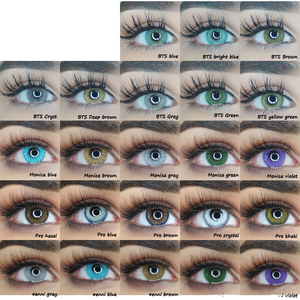
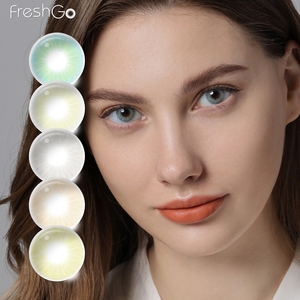
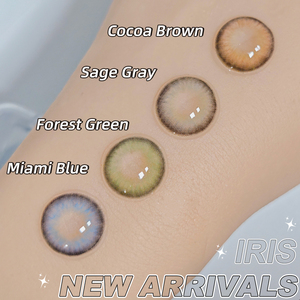
◉ OEM Circle Lens Selection Guide: Formulation, Matrix Architecture & Optical Engineering
In modern optometry and cosmetic optics, circle lenses (characterized by their pronounced limbal rings designed to delineate and visually magnify the eye's appearance) occupy an intricate intersection between Class II medical devices and fast-moving beauty formulations. When engineering a private label program, institutional procurement departments must weigh visual aesthetics against clinical ergonomics: corneal hypoxia mitigation, edge contour geometry, and high-precision pigment stability.
We advise enterprise clients to stratify their SKUs across specific optical parameters based on consumer segment demographics and climatic factors:
| Segment Matrix | Target Base Curve (BC) / DIA | Hydration / Core Polymer | Limbal Ring Typography | Target Market Intent |
|---|---|---|---|---|
| Subtle Everyday Natural | BC: 8.5–8.6mm | DIA: 14.0–14.2mm | 38% Polymacon (High Tear Stability) | Feathered micro-dot gradation | Workplace, daily professional wear, low visual fatigue |
| High-Definition Circle Enlarging | BC: 8.6mm | DIA: 14.5mm | 42% HEMA-NVP (Lubricious surface) | Deep solid outer ring (1.5mm width) | Visual impact, beauty editorial, influencer styling |
| Hydra-Comfort Winter Daily | BC: 8.7mm | DIA: 14.2mm | 55% Hydrogel + Phosphorylcholine (PC) | Semi-translucent radial tint | Cold/dry climates, screen workers, premium single-use |
| Theatrical & Cosplay VFX | BC: 8.5–8.6mm | DIA: 14.2–14.8mm | 38% Tear-Resistant Low-Hydration | Full opaque masking layer | Conventions, creative media, performance, high opacity |
A vital imperative for distributors and brand architects is pigment entrapment engineering. Unlike early-generation contact lenses produced via superficial surface-stamping (which risked dye leaching or micro-abrasion of the epithelial layer), all tier-1 OEM manufacturing operates exclusively through Tri-Layer Sandwich Technology. In this procedure, FDA-cleared micronized bio-compatible pigments are locked internally between two micro-thin layers of hydrogel, ensuring zero direct corneal contact and maintaining smooth planar surface wetting profiles.
Future Procurement Trends Shaping the Circle Lens Landscape
Comprehensive regulatory and technical forecasting for international contract buyers from 2025 to 2030.
↗ Accelerated Transition to Daily Disposable Formats
Global consumer demand is rapidly pivoting from yearly reusable models toward single-use Daily Disposable (1-Day) formats. Driven by clinical dermatological and ocular hygiene awareness, institutional buyers report 28% year-over-year growth in single-use SKU allocations. Daily lenses eliminate lens care non-compliance issues and mitigate microbial bio-burden risks entirely.
⚙ Silicone Hydrogel (SiHy) Pigment Integration
The industry benchmark is evolving beyond conventional Poly-HEMA matrices into high-Dk/t Silicone Hydrogel cosmetic circle lenses. Historically constrained by tint bonding complexities on hydrophobic siloxane backbones, contemporary surface-plasma graft polymerization now allows high oxygen-permeable SiHy matrices to host vivid multi-tone circle designs.
☼ Comprehensive HEV & UV Blocker Impregnation
Next-generation OEM procurement requirements prioritize integrated UV-A, UV-B, and High-Energy Visible (HEV) blue-light filtering compounds incorporated directly into the monomer formulation. Rather than serving purely cosmetic functions, commercial circle lenses increasingly act as proactive photoprotective optical barriers against indoor and outdoor radiative stress.
▣ Technological Innovation & Next-Gen Manufacturing Dynamics
As circle lenses shift from niche cosmetic subcultures into mainstream beauty portfolios, manufacturing methodologies have evolved. Today's manufacturing ecosystems must balance high-yield automated throughput with microscopic tolerance verification:
Cast Molding Precision
Moving away from legacy spin-casting or manual lathe-cutting, fully automated closed-loop dual-sided cast molding ensures micron-level base curve accuracy (±0.02mm) across continuous million-unit batch runs.
Multi-Tone Iris Gradient Rendering
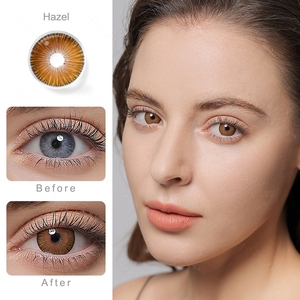
Advanced algorithmic pixel scattering replaces traditional coarse screen dots. 3D sub-micron dot matrixing creates hyper-realistic iridal depth, smoothly blending dark brown eyes with honey, hazel, grey, and olive undertones.
Automated AOI Quality Systems
100% of finished lenses undergo high-speed Automated Optical Inspection (AOI) camera screening, scanning for edge tears, bubble voids, center thickness variations, and off-axis pigment deviations prior to blister-pack sealing.
Why Global Importers Partner with Ttdeyelens OEM
Combining precision biomedical contract fabrication with comprehensive turnkey branding services for optical retailers and distributors.
Full Regulatory File Stewardship
Decorative and corrective lenses are regulated under strict medical frameworks worldwide. We provide complete technical dossiers including ISO 13485 QMS certification, US FDA establishment filings, CE 0197 certifications, and Health Canada Class II registration protocols.
Broad Prescription Power Scope
Unlike cosmetic suppliers limited exclusively to 0.00 Plano fashion lenses, our casting facilities sustain broad minus-power manufacturing spans: 24 distinct diopter powers covering 0.00 and -1.00 through -8.00 (in 0.25 steps to -5.00, and 0.50 steps beyond), allowing broad demographic reach.
End-to-End Packaging Customization
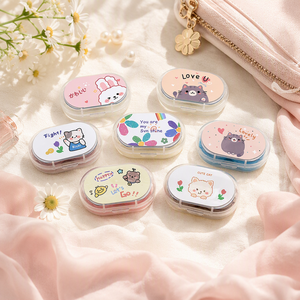
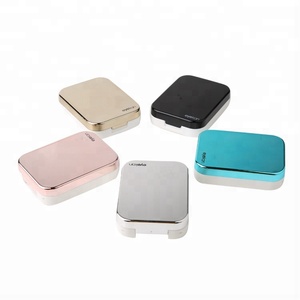
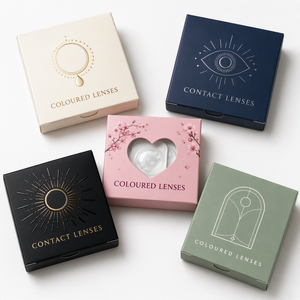
Beyond lens synthesis, we engineer complete consumer-ready experiences: customized PVC/foil sterile blisters, medical grade polypropylene storage cases, UV sterilization travel vessels, and custom rigid retail boxboard featuring holographic hot-foil or multi-lingual compliance labeling.
Frequently Addressed Sourcing Questions
Clear, direct answers for optical supply chain managers, brand founders, and institutional procurement directors.
Q: What is the Minimum Order Quantity (MOQ) for custom private label circle lenses?
Standard custom private-label runs utilizing existing certified color moulds typically start at 500 to 1,000 pairs per shade with mixed prescription powers. For entirely proprietary custom-designed dot matrix graphics or tailored packaging packaging die-cuts, MOQs start at 5,000 pairs per run to amortize sterile line setup parameters.
Q: Are your circle lenses compliant with Health Canada and US FDA Class II regulations?
Yes. Both decorative (plano) and vision-correcting (myopia) contact lenses are legally categorized as medical devices across North America and Europe. Our production infrastructure maintains ISO 13485:2016 audited quality systems, biocompatibility toxicological clearances (ISO 10993), and factory audit reports suitable for commercial import registrations.
Q: How do your circle lens designs achieve realistic coverage over dark brown irises?
Coverage on dark melanistic eyes requires high-density color pigmentation combined with radial translucent windows. Our proprietary 3-layer color matrix uses an opaque micro-dot base to lift dark tones, an iris-textured chromatic midpoint for realistic tone shifting, and a calibrated dark outer limbal ring for youthful ocular framing.
Q: What documentation is supplied for customs clearance and medical device importer licensing?
Every commercial order shipment is accompanied by a Certificate of Analysis (CoA), comprehensive Lot Sterilization Gamma/Autoclave validation records, Free Sale Certificates (FSC), Material Safety Data Sheets (MSDS), and complete English-French/Bilingual compliance artwork declarations.
Q: Can we formulate custom packaging configurations and private-label accessory kits?
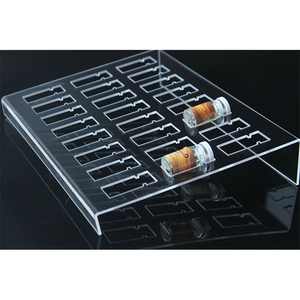
Yes. We manufacture full-scale integrated collections: blister packs, vial-bottling solutions, custom paperboard folding boxes with cold/hot foil stamping, antimicrobial PP contact lens containers, and retail presentation racks optimized for brick-and-mortar boutique counters.
Q: What is the standard sample qualification and mass manufacturing lead time?
Pre-production sample runs and rapid prototyping of graphics are completed within 10 to 15 business days. Once packaging mechanical art and diopter distributions are approved, high-capacity commercial production runs generally dispatch within 25 to 35 calendar days with trackable international freight dispatch.
Ready to Scale Your Private Label Circle Lens Portfolio?
Consult with our OEM/ODM technical team for comprehensive product dossiers, regulatory paperwork, pilot sample configurations, and competitive volume tier pricing structures tailored to your market footprint.