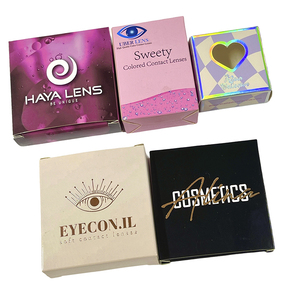
Free Design Custom Soft Contact Lens Box Paper Packaging
Eco-shield coated SBS paperboard packaging engineered for medical blister stability, anti-counterfeit micro-etching, and bilingual FDA/MDR regulatory compliance.
Explore our flagship portfolio spanning high-permeability cosmetic circle lenses, specialized diagnostic fundus optics, sterile daily hydrogels, and customized medical-grade barrier packaging.
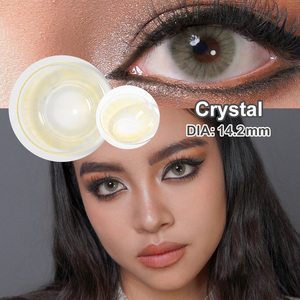
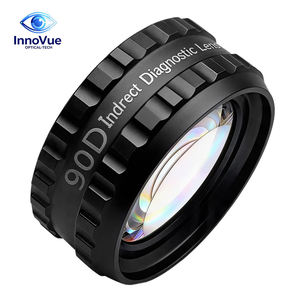
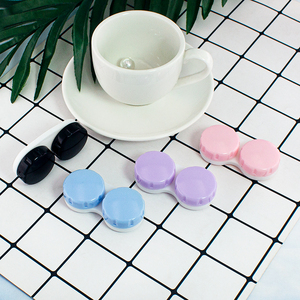
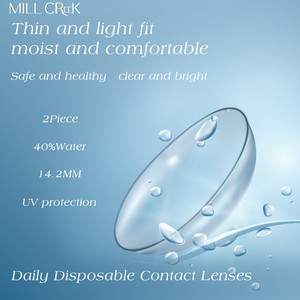
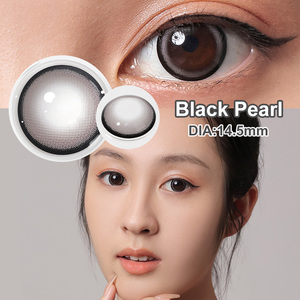
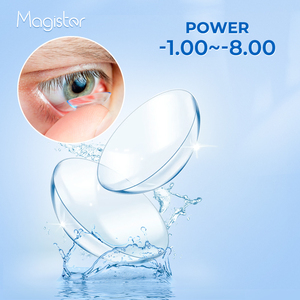
In the regulated global landscape of medical devices, cosmetic circle lenses represent one of the most chemically and optically complex consumer health categories. Unlike standard vision-correcting clear contacts, cosmetic circle contact lenses integrate micro-pigment layers to accentuate the limbal ring and modify iris coloration. As a tier-one contact lens manufacturer, our engineering foundation is rooted in absolute biological inertness, uncompromised oxygen permeability (Dk/t), and optical centration accuracy.
Our manufacturing facility implements computer-controlled cast molding systems that ensure nanometer-level edge smoothness, directly eliminating mechanical abrasion on the corneal epithelium. By maintaining tight base-curve tolerances (±0.02 mm) and diameter precision (±0.05 mm), we provide private label eyewear brands, optical chains, and clinical distributors with consistent fitting profiles that drastically reduce customer dissatisfaction and clinical rejection rates.
 Global Regulatory Compliance Assurance
Audited annually under ISO 13485:2016 quality management frameworks, fully compliant with EU MDR 2017/745, US FDA 510(k), and Health Canada Class II medical device requirements.
From proprietary sandwich color printing to end-to-end regulatory technical documentation, our infrastructure is built to accelerate market penetration while shielding brand owners from liability.
Our bio-encapsulation method seals organic and inorganic iron-oxide pigments securely between two micro-thin layers of hydrogel monomer. Pigments never directly touch the cornea or palpebral conjunctiva, completely preventing micro-leaching and allergic foreign-body reactions.
While many cosmetic suppliers limit manufacturing to zero-power (Plano), we maintain mass-production capabilities across 24 distinct optical powers: Plano (0.00), -1.00 to -5.00 in 0.25D increments, and -5.00 to -8.00 in 0.50D increments. This empowers our OEM partners to capture the entire vision correction market.
From sterile blister sealing to bespoke outer secondary packaging and multi-language user leaflets, we offer comprehensive private label services. Our automated blister lines support individual peel-foil barcode serialization, RFID tracking integration, and tamper-evident cosmetic presentation boxes.
Compare our core material formulations to select the ideal substrate for your brand's wear modalities and target price-performance tier.
| Performance Metric | PolyHEMA Standard Matrix | High-Water Etafilcon Matrix | Next-Gen Silicone Hydrogel (SiHy) |
|---|---|---|---|
| Primary Monomer Composition | 2-Hydroxyethyl Methacrylate (HEMA) | HEMA + Methacrylic Acid (MAA) | Fluoro-Silicone Macromer + HEMA |
| Water Content (%) | 38% – 42% | 55% – 58% | 45% – 48% |
| Oxygen Transmissibility (Dk/t) | 12 – 18 Fatt units | 22 – 28 Fatt units | 85 – 120 Fatt units |
| Recommended Wear Modality | Monthly / 6-Month / Yearly | Daily Disposable (1-Day) | Extended Day / Premium Daily |
| Modulus of Elasticity (MPa) | 0.35 – 0.45 (Ultra-soft) | 0.30 – 0.40 (Flexible) | 0.65 – 0.85 (Structural handling) |
| Base Curve (BC) Availability | 8.5 mm / 8.6 mm | 8.5 mm / 8.6 mm | 8.6 mm / 8.7 mm |
| Diameter (DIA) Range | 14.0 mm – 14.5 mm | 14.0 mm – 14.2 mm | 14.0 mm – 14.5 mm |
| Color Printing Compatibility | Cast Sandwich Pad Printing | Dual Polymerization Pad | Micro-Dot Bio-Co-Polymerization |
Strategic forecasts derived from supply chain telemetry, regulatory shifts, and consumer behavior analysis across North America, Europe, and Asia-Pacific.
Regulatory bodies and ophthalmologists increasingly advocate for single-use modalities. Brands sourcing circle lenses are migrating order volume from annual vials to 10-pack and 30-pack daily blisters to eliminate bio-film buildup and cleaning non-compliance.
Historically limited to clear lenses due to dye compatibility challenges, advanced silicone hydrogel formulations are achieving breakthrough color bonding. High Dk/t cosmetic lenses will capture over 40% of the premium contact lens market by 2028.
Artificial, stark circle borders are being superseded by pixelated micro-dot transitions that blend into natural stromal patterns. Digital direct-to-mold imaging allows multi-tone iris depth that looks completely organic under bright daylight.
B2B buyers face stringent ESG audits. Manufacturers are adopting ultra-compact polypropylene blisters that cut raw plastic usage by 30%, alongside fully biodegradable outer packaging certified by FSC and soy-based printing inks.
A structured blueprint for procurement directors and optical product managers auditing contact lens manufacturing partners.
Verify that the production facility maintains active ISO 13485:2016 certifications covering cosmetic and corrective hydrogel contact lenses. Validate that technical dossiers include ISO 10993 cytotoxicity, ocular irritation, and systemic toxicity biocompatibility reports.
Ensure the manufacturer leverages automated vision inspection (AOI) systems rather than manual human visual checks alone. AOI captures microscopic edge notches, air entrapment, color register shifts, and particulate contamination down to 5 microns.
Review the supplier's secondary packaging flexibility. Modern international supply chains necessitate Unique Device Identification (UDI) matrix codes on every single blister, coupled with lot numbers, sterile expiry dates, and tamper-resistant seals.
Direct technical answers addressing regulatory compliance, MOQ structures, private labeling, and biological safety standards.
Whether launching an exclusive designer circle lens line, transitioning your portfolio to high-Dk silicone hydrogel, or securing an agile ISO 13485 supply chain partner with broad diopter availability, our ophthalmic engineering team is ready to assist.