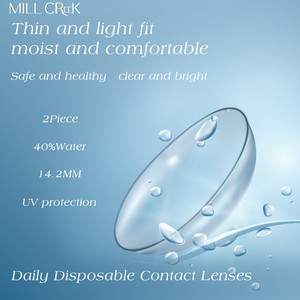
Engineered Clinical Performance: Primary Product Directory
Explore medical-grade contact lenses, high-barrier sterile blister packaging systems, and companion optometry devices manufactured to rigorous CE and ISO 13485 standards.
Advanced Manufacturing Methodologies: Inside China's Leading ODM Cleanrooms
Moving beyond conventional lathe-cutting, contemporary contact lens fabrication requires automated double-sided cast molding, advanced polymer cross-linking, and closed-loop bio-compatibility verification.
Automated Full Cast Molding
Utilizing high-precision optical steel tooling with sub-micron surface tolerances (<0.05μm Ra), monomer liquid is injected directly into specialized polypropylene female and male molds. Thermal or UV-initiated radical polymerization ensures uniform curvature, eliminating optical aberrations common in legacy mechanical lathe-cut manufacturing processes.
Pigment Micro-Encapsulation
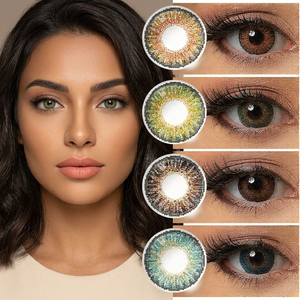
Color cosmetic lenses incorporate proprietary "Sandwich" multi-layer printing technology. Non-toxic, pharmaceutical-grade iron oxide and titanium dioxide pigments are embedded strictly between two cross-linked transparent hydrogel layers, completely preventing pigment bleeding or physical direct contact with the sensitive corneal epithelium.
Automated Optical Inspection (AOI)
Every single polymerized lens passes through computerized wet-cell automated optical scanners before sealed autoclaving. Sub-pixel machine vision identifies edge notches, flash artifacts, internal air inclusions, surface scratch micro-imperfections, and power deviation beyond ±0.12D at rapid manufacturing velocities.
Engineering Specifications Matrix: Hydrogel vs. Silicone Hydrogel
Procurement teams require empirical benchmarks to align target consumer demographics, optical power performance, and retail margins.
| Performance Parameters | HEMA + NVP Hydrogel | Silicone Hydrogel (SiHy Gen 3) | Clinical Advantage for Brands |
|---|---|---|---|
| Oxygen Permeability (Dk/t) | 18 – 28 × 10-9 Fatt Units | 100 – 145 × 10-9 Fatt Units | Extended all-day comfort; minimizes corneal hypoxia |
| Equilibrium Water Content | 38% – 45% (Stabilized) | 33% – 48% (Naturally Wetting) | Low on-eye dehydration in dry HVAC climates |
| Modulus of Elasticity (MPa) | 0.30 – 0.42 MPa (Ultra-Soft) | 0.50 – 0.75 MPa (Shape Retentive) | Easy insertion for novice wearers without flaccid collapse |
| UV Radiation Protection | Class II (UVA > 85%, UVB > 95%) | Class I (UVA > 90%, UVB > 99%) | Built-in preventative ocular wellness selling point |
| Available Base Curves (BC) | 8.5mm, 8.6mm, 8.7mm | 8.4mm, 8.6mm, 8.8mm | Fits >97% of worldwide corneal geometry standard profiles |
| Power Range Availability | Plano (0.00) to -10.00D | Plano (0.00) to -12.00D (Toric available) | Covers comprehensive severe myopia patient requirements |
Future Sourcing Trends: 2026–2030 Global Contact Lens Procurement
In-depth supply-chain analysis for procurement officers, enterprise buyers, and private label brand founders seeking forward-looking competitive moats.
Aggressive Pivot to Daily Disposables
Global optical markets are accelerating the transition away from annual replacement modalities toward single-use daily disposables (1-Day). Bulk ODM manufacturing lowers per-blister production overhead, meeting heightened consumer expectations for microbiological hygiene and eliminating maintenance solutions.
Silicone Hydrogel Accessibility
While historically constrained by proprietary Western patent monopolies, modern Chinese ODM manufacturers have formulated non-infringing fluorosilicone macromers with natural internal wettability, enabling mid-market consumer brands to retail high-Dk silicone lenses at disruptive retail margins.
Integrated Clinical Turnkey Supply
Enterprise procurement departments are rationalizing vendors by partnering with full-ecosystem ODMs capable of bundling primary sterile blister foils, medical device master documentation, luxury multi-pack folding boxes, and automated ultrasonic care hardware under unified QA audits.
Global Regulatory Harmonization
The introduction of the EU Medical Device Regulation (MDR 2017/745) and FDA 21 CFR 820 quality mandates requires Chinese factory partners to maintain persistent Technical Files, biocompatibility toxicology dossiers (ISO 10993), and full batch digital traceability back to base monomers.
Enterprise Factory Infrastructure: Why Partner with Our Cleanroom Facilities?
Combining world-class optical engineering, multi-cavity injection tooling, and pharmaceutical regulatory compliance.
Sterile Barrier Class 100K Infrastructure
Our production cleanrooms maintain positive pressure HEPA laminar filtration, controlled relative humidity (45±5%), and micro-particle monitoring exceeding international ISO 14644-1 parameters.
Expedited Prototype Sampling Cycles
In-house mold tooling facilities enable custom optical base curve adjustments, toric stabilization modifications, and complex multi-tone cosmetic color sampling within 14 working days.
Complete Legal Registration Support
We supply target market regulatory filings, including CE certificates, US FDA Device Master Files (DMF), Health Canada Medical Device Licenses, and bilingual packaging compliance blueprints.
ISO 13485:2016 Certified QMS
European CE Conformity Marking
US FDA Establishment Registered
ISO 10993 Cytotoxicity Cleared
Procurement & Technical FAQ: Strategic B2B Inquiries
Essential engineering, compliance, and logistics questions answered for institutional optical purchasing agents.
What are the typical Minimum Order Quantities (MOQ) for custom OEM colored vs. clear contact lenses? +
For catalog stock formulations with customized secondary packaging, minimum orders start at 1,000 pairs per power increment. Fully customized pigment patterns, bespoke base curves, or novel silicone hydrogel polymer configurations generally require an MOQ of 5,000 to 10,000 pairs per SKU to amortize precision injection mold cavity setup and automated blister line tooling.
How does your factory ensure pigment safety in cosmetic color contact lenses? +
We exclusively employ the "Sandwich" cast-molding encapsulation protocol. Pigments are embedded safely within the internal cross-linked hydrogel matrix, isolated by an anterior layer of 0.02mm pure polymer and a posterior layer matching corneal tolerances. The surface is subjected to rubbing stress tests and organic solvent immersion tests to ensure zero direct dye migration onto ocular tissue.
What regulatory documentation is provided to support brand import approvals in the US and EU? +
We provide full technical documentation dossiers compliant with the EU MDR (2017/745) Class IIa classifications and FDA 510(k) clearances. This includes raw polymer formulation sheets, steam autoclave sterilization validation records (SAL 10-6), accelerated 3-year aging shelf-life stability data, ISO 10993 biocompatibility and ocular irritation assays, and blister barrier integrity peel-force metrics.
Can your facility accommodate toric and multifocal prescriptions in private label runs? +
Yes. Our computerized micro-molding tooling produces ballast-prism and peri-ballast stabilized designs for astigmatism (cylinder corrections up to -2.75D, axes from 10° to 180° in 10° steps). Multifocal designs utilize progressive aspheric central near or central distance profiles to address presbyopia with high pupil adaptation rates.
What secondary packaging configurations and multi-pack solutions are available? +
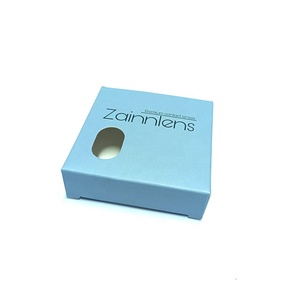
We offer fully integrated packaging solutions, ranging from individual high-barrier polypropylene blister packs with medical aluminum heat-sealed foils to 2-pack, 10-pack, 30-pack, and 90-pack retail folding cartons. Surface embellishments include soft-touch matte coatings, UV spot varnishes, anti-counterfeit holographic stamping, tamper-evident seal stickers, and custom die-cut PET transparent windows.
What is the standard production timeline from contract sign-off to port departure? +
For existing certified private label catalog formulations, lead times are approximately 25 to 35 business days, including sterile autoclaving and AOI quality release. New custom pattern color development or custom blister tooling requires 45 to 60 days to allow for physical prototype generation, optical verification, and sterile microbial challenge testing prior to volume manufacturing.
Initiate Your Custom Lens Manufacturing Project
Connect directly with cleanroom manufacturing specialists, review factory audit schedules, and request physical material sampling kits.