Engineering Excellence in Color Contact Lens Manufacturing
The global cosmetic and prescription colored contact lens market requires absolute compliance with ISO 13485, CE (EU MDR), and US FDA 510(k) medical device standards. Sourcing directly from verified contract manufacturers guarantees biocompatible pigment entrapment, optimized oxygen permeability (Dk/t), high yield rates, and complete private label custom packaging solutions.
Top 10 Global Colored Contact Lens Factory Categories & Sourcing Models
When selecting OEM/ODM partners, procurement directors must evaluate whether a supplier operates as a primary chemical casting lab, an automated high-volume converter, or an accessory packaging integrator.
1. Turnkey ISO 13485 OEM Contract Foundries
Specialized high-capacity casting plants operating fully automated Cast Molding lines. They produce raw blister-sealed lenses under cleanroom conditions, offering complete Device Master Files (DMF) for brand registration.
Fully validated sandwich printing robotics
Annual capacity exceeding 50,000,000 units
2. South Korean Boutique Aesthetic Labs
Renowned for trend-setting multi-tone gradient irises, watercolor transitions, and limbal ring blending. Ideal for influencer beauty brands prioritizing natural realism over large-volume commodity runs.
Pioneers of 3-tone and 4-tone depth printing
Higher per-unit cost with exquisite aesthetic nuance
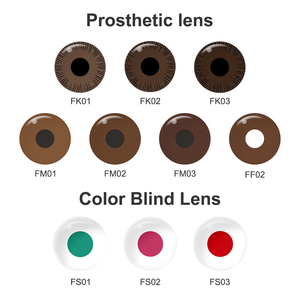
Niche manufacturers producing therapeutic cosmetic lenses to address aniridia, corneal opacity, diplopia, and coloboma. Units require custom computerized lathe cutting and hand-airbrushed pigment laydown.
Opaque pupil occluders and custom base curves
Strict medical prescription handling systems
5. High-Impact Cosplay & Theatrical Manufacturers
Specialized suppliers delivering saturated, high-opacity pigment coverage for pop-culture, theatrical productions, and Halloween spectacles. Engineered to cover even deep melanin dark-brown eyes.
Sclera (22.0mm) and Mini-Sclera (17.0mm) options
Mesh and anime pupil effects with clear sight channels
6. Agile Private-Label Ready Wholesalers
Stock-holding master distributors offering low minimum order quantities (MOQs from 50–100 pairs) across hundreds of trending SKUs with customized secondary sleeve packaging and English/French labeling.
Factory plants dedicated to Class I medical device paper and blister housing. They produce thermoformed polypropylene blisters, medical Tyvek peel lids, and tamper-evident luxury unboxing sets.
Certified saline burst-pressure test verification
Fully compliant with international UDI barcode mandates
8. Automated Daily Disposable (1-Day) Mega-Plants
Ultra-automated production lines targeting single-use daily color lenses. Daily contact lens manufacturing requires extreme yield precision to achieve competitive unit pricing for high-volume retail subscriptions.
Contract laboratories that accommodate custom toric prescriptions (astigmatism power) combined with cosmetic iris patterns, bridging the gap between medical optometry clinics and cosmetic retail.
Prism ballast and dynamic stabilization stabilization
Cylinder powers up to -3.75 with customized axis degrees
Engineering Benchmarks
Comparison of Lens Casting & Printing Technologies
Production Technology
Process Mechanics
Dk/t & Comfort Rating
Pigment Safety
Optimal Order Profile
Full Cast Molding (Triple Layer)
Dual-mold curing where monomer forms a solid envelope entirely encasing the ink matrix.
High (Dk/t: 22 - 35 HEMA / 80+ SiHy)
Zero leaching; pigment cannot touch corneal surface or palpebral conjunctiva.
Mass production (>10,000 pairs / shade); optimal for branded retail distribution.
Semi-Cast Pad Printing
Ink is transferred onto a concave mold prior to monomer filling and polymerization.
Moderate (Dk/t: 18 - 25)
Safe if secondary protective coating monomer is thoroughly UV cured.
Flexible batches (1,000–5,000 pairs); balanced speed-to-market and low tooling cost.
Computerized Lathe Cutting
Solid dehydrated polymer buttons are diamond-cut on high-speed CNC lathes.
Moderate to High (Material dependent)
Surface printed or bonded; requires precise edge post-polishing.
Custom prosthetic lenses, toric cosmetic orders, and specialized Rx powers.
Spin Casting (Liquid Centrifugal)
Rotational molds distribute liquid monomer via centrifugal force and surface tension.
Moderate (Dk/t: 15 - 20)
Ink injected during spin; risk of slight pattern dispersion if unmonitored.
Legacy budget production lines; largely superseded by automated cast molding.
Technological Roadmaps
Future Development Trends in Contact Lens Science (2025–2030)
The convergence of biocompatible polymer chemistry and digital optical printing is revolutionizing cosmetic contact lens manufacturing.
Silicone Hydrogel Material Domination
Conventional HEMA (hydroxyethyl methacrylate) lenses, while flexible and cost-effective, suffer from limited oxygen flux. Sourcing trends show an industry-wide transition toward silicone hydrogel formulations containing hydrophilic agents like phosphorylcholine (PC) and hyaluronic acid (HA), yielding all-day comfort without ocular redness.
High-Definition Photorealistic Multi-Tone Inks
Next-generation cast molding lines incorporate sub-micron inkjet drop-on-demand printing. Rather than traditional dot-matrix stamping, micro-nozzles deposit continuous biometric gradient layers that mirror the natural human stroma, producing authentic depth on dark brown and hazel eyes alike.
Eco-Conscious Slim Blisters & Biodegradable Packs
B2B procurement is heavily influenced by international environmental regulations. Top-tier factories have engineered ultra-flat saline blister packs consuming 65% less virgin plastic and 80% less saline solution volume, directly lowering intercontinental air-freight carbon footprints and import tariffs.
Strategic Supply Chain Management
Future Procurement & Sourcing Strategies for Brand Owners
Building an agile, high-margin cosmetic lens brand requires balancing international regulatory hurdles, rapid fashion trend turnarounds, and inventory risk.
Low-MOQ Agile Market Testing
Forward-thinking brands avoid sinking massive capital into untested color palettes. Modern factories support split-batch production—allowing 500 pairs to be divided across 5 distinctive SKUs. This allows retail managers to validate actual sell-through before committing to 50,000-unit factory production runs.
Strict Medical Device Regulatory Audit Trailing
Health authorities worldwide classify colored contact lenses as Class IIa / Class II medical devices regardless of whether they correct refractive vision. Importers must insist on obtaining certified Technical Documentation Files, ISO 13485 audit certificates, and validated biological evaluation reports (ISO 10993 cytotoxicity and ocular irritation testing).
Turnkey Custom Secondary Packaging Integration
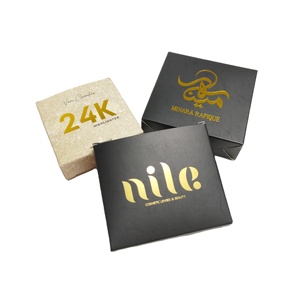
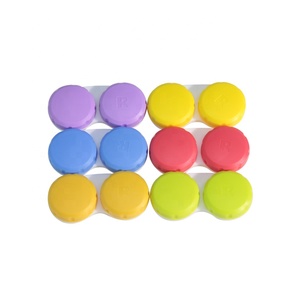
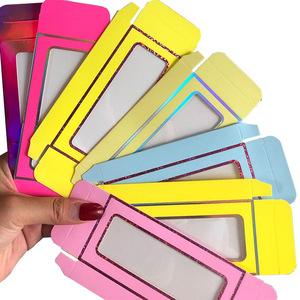
A color lens cannot stand out on retail shelves or social media unboxings inside a plain generic carton. Sourcing from a factory that integrates primary blister manufacturing with fully customized, FSC-certified secondary paper boxes, rose-gold foil stamping, and matching lens cases streamlines logistics and prevents cross-vendor supply chain delays.
Factory Authority & Manufacturing Standards
Engineered for Safety. Certified for Global Distribution.
Our OEM/ODM manufacturing facility integrates Swiss high-speed cast molding systems, robotic micro-pigment sandwich encapsulation, and cleanroom air handling engineered to ISO Class 8 (100,000 grade). Every single lens passes through high-resolution Automated Optical Inspection (AOI) to eliminate edge burs, tear defects, and pattern decentration before undergoing high-pressure 121°C terminal steam sterilization.
Whether you require plano cosmetic lenses for high-street cosmetic chains or broad prescription ranges spanning -1.00 to -8.00 in 0.25D increments, our production team provides full technical compliance, bilingual packaging support, and steady lead times.
Audited and verified under ISO 13485:2016, European CE Medical Device Regulation, and US FDA manufacturing standards for global peace of mind.
Buyer Technical Knowledge Base
Frequently Asked Questions in Color Contact Lens Procurement
Direct answers to essential technical, safety, regulatory, and commercial questions for professional optical buyers.
How does Sandwich Technology guarantee pigment safety?
Sandwich technology (also known as micro-encapsulation or dual-coating) locks FDA-approved cosmetic colorants strictly inside the internal core of the polymer matrix. The pigment particles are permanently sealed between two ultra-thin layers of clear hydroxyethyl methacrylate or silicone hydrogel. This guarantees zero direct contact between colorants and the delicate corneal epithelium or inner eyelid tissue, completely eliminating dye elution and mechanical friction abrasions.
Are non-prescription (Plano 0.00) lenses still regulated as medical devices?
Yes. Regulatory agencies worldwide—including the US FDA, Health Canada, the European Medicines Agency (under EU MDR 2017/745), and the Australian TGA—classify all contact lenses, zero-power cosmetic lenses included, as medical devices. They sit directly on the cornea and alter ocular surface physiology; therefore, they must be produced in certified facilities complying with ISO 13485 and sterile batch release validation.
What is the standard water content and how does it correlate with wearing comfort?
Our core product line features a balanced 38% to 42% water content in hydrogel formulations. While novice wearers often believe higher water content is invariably better, high-water hydrogel lenses (e.g., 58%+) actively draw moisture out of the tear film in dry, air-conditioned, or winter environments, leading to end-of-day dryness. A stable 40% water content maintains structural lens integrity, minimizes dehydration evaporation, and delivers optimal 8-to-12 hour wearing comfort.
What is the minimum order quantity (MOQ) for custom OEM private labeling?
For ready-made inventory with custom secondary carton packaging (your brand logo, barcode, and box finish), MOQs start as low as 100 pairs total. For bespoke iris pattern development with proprietary mold casting and exclusive colorways, production runs typically require 1,000 to 5,000 pairs per shade to amortize precision photolithography tooling and high-precision casting mold sets.
How are lenses sterilized and what is the certified shelf life?
All lenses are submerged in isotonic buffered saline solution inside sealed medical polypropylene blisters and subjected to validated moist-heat terminal steam autoclave sterilization at 121°C (250°F) for 20–30 minutes. This achieves a sterility assurance level (SAL) of 10⁻⁶. Our blister sealing maintains a verified sterile barrier shelf life of 5 full years from the date of manufacture when stored away from direct sunlight.
Can the factory manufacture prosthetic contact lenses for scarred or blind eyes?
Yes. Our medical custom lab produces specialized prosthetic contact lenses designed to mask corneal leukoma, aniridia, and ocular trauma. We offer both clear-pupil options (for eyes retaining visual function) and occluded black-pupil designs (to eliminate intractable diplopia or completely hide scarred ocular disfigurement), matched precisely to the patient's healthy contralateral eye color.
What prescription ranges are covered across standard color lines?
Our core best-selling natural series are stocked in 24 distinct powers: Plano (0.00) and -1.00D through -8.00D. Power steps are graduated in 0.25D increments up to -5.00D, and 0.50D increments from -5.00D to -8.00D. Extended ranges up to -12.00D as well as custom cylinder powers for astigmatism can be produced via specialized custom OEM scheduling.
How do you ensure vibrant color opacity on dark brown eyes?
Asian, Hispanic, Middle Eastern, and African wearers possess dense natural melanin pigmentation. Transparent tinting is invisible on such eyes. Our R&D lab formulates opaque multi-tone patterns utilizing high-refractive bio-compatible titanium dioxide and mica bases beneath the top color gradient. This creates an optical barrier that reflects incident light, transforming deep brown irises into striking grey, green, hazel, or icy blue tones without a fake flat look.
What documentation is provided to support international customs clearance?
We provide a full export documentation dossier including ISO 13485:2016 Manufacturer Certificates, Certificates of Analysis (COA) for each production lot, Free Sales Certificates (FSC), Material Safety Data Sheets (MSDS), Biocompatibility Test Reports, and sterilized batch biological challenge records to ensure seamless clearance at customs ports worldwide.
What are typical OEM/ODM production lead times from artwork approval?
For ready-cast stock units with custom printed brand sleeves, delivery is dispatched within 7 to 14 business days. For full turnkey OEM production requiring customized secondary paper box fabrication, foil printing, blister sealing, and autoclave sterilization, standard factory lead time spans 25 to 35 calendar days from final digital proof verification.
Scale Your Color Contact Lens Line With Direct Factory Pricing
Connect with our senior optical engineering and OEM procurement team today. Receive comprehensive product catalogs, technical master files, sample evaluation kits, and real-time quotation matrices.