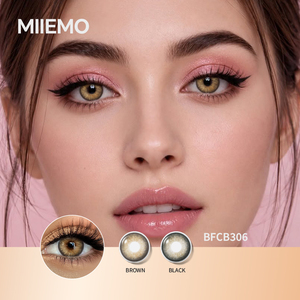
HEMA 40%
ISO 13485
Plano to -8.00
Explore fully scalable private-label hydrogel formulations, precision color matrices, and certified secondary packaging solutions direct from production lines.
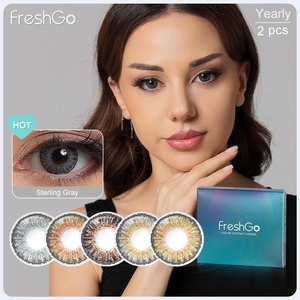
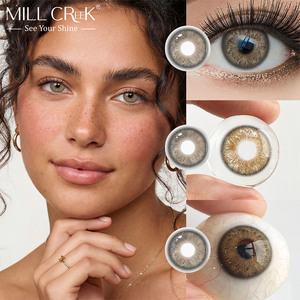
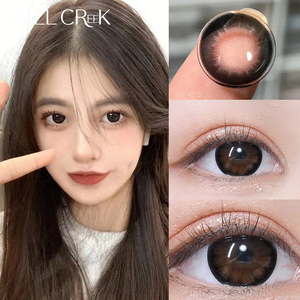
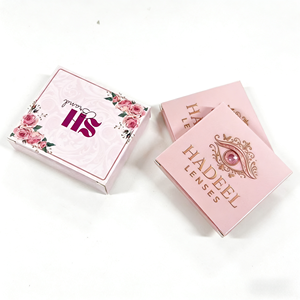
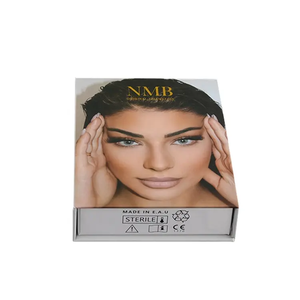
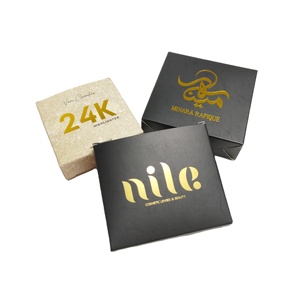
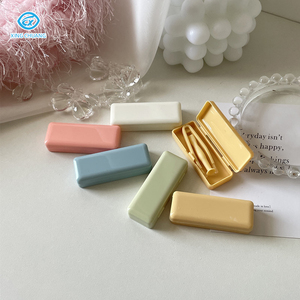
The global contract manufacturing landscape for decorative, prosthetic, and vision-correcting soft contact lenses has shifted from basic aesthetic molding to high-precision biopolymer fabrication. For commercial wholesale distributors, private label incubators, and established optical retail networks, navigating regulatory approvals, polymer safety, and pigmentation engineering represents the foundation of market durability and brand equity.
Soft hydrophilic contact lenses (HEMA-based hydrogels and high-Dk silicone hydrogels) are classified globally as Class II or Class III medical devices (such as Class IIa/IIb under European Union MDR 2017/745, Class II by the US FDA, and Class II by Health Canada). Under our ISO 13485 quality management systems, our automated cast-molding pipelines eliminate physical ocular irritation by integrating the proprietary Semi-Embedded Sandwich Printing Technology. This process encapsulates cosmetic pigments completely between hydrogel matrices, ensuring zero direct corneal contact, zero pigment shedding, and sustained oxygen permeability across extensive wear cycles.
| Evaluation Parameter | Cast-Molding Technology (DSC Industrial) | Traditional Lathe-Cutting Method | Spin-Casting Technique |
|---|---|---|---|
| Surface Repeatability | Ultra-High (Precision CNC tooling molds) | Moderate (Operator dependent) | High (Parabolic limitations) |
| Pigment Encapsulation | Micro-sandwich layered encapsulation | Surface printing / prone to abrasion | Bulk dispersion or surface pad print |
| Edge Profile Uniformity | Laser-calibrated rounded comfort profile | Mechanically polished, variable bevel | Thin, variable edge stress |
| Production Scalability | 1,000,000+ pieces/month with low unit cost | Low throughput / High labor overhead | Moderate throughput / Geometry limits |
| Diopter Uniformity | Consistent -0.25 to -0.50D increments | Requires manual bench verification | Limited power range accuracy |
Strategic intelligence for brand owners and distributors sourcing soft contact lenses in an evolving regulatory and consumer landscape.
Regulatory scrutiny around single-use plastics is driving brands toward FSC-certified, recyclable kraft rigid packaging and biodegradable blister solution seals without compromising sterility barriers.
While poly-HEMA continues to dominate decorative segments due to superior wettability and dimensional stability, next-gen silicone-hydrogel colored lenses are expanding into daily-wear niches, offering higher oxygen transmissibility (Dk/t > 80).
Consumer preference has shifted from unnatural opaque blocks to 3-tone and multi-tone micro-dot gradients that blend seamlessly with naturally dark ocular irises (Fitzpatrick ocular levels 4–6), catering to global demographic diversity.
As an end-to-end manufacturer specializing in cosmetic, toric, and spherical vision correction lenses, our facilities combine robotic precision with strict regulatory compliance to empower private brands globally:
Operates under audited ISO 13485 quality systems, conforming to GMP requirements, US FDA registration protocols, and European CE directives for total regulatory assurance.
From diopter ranges (Plano 0.00 to -8.00D across 24 standardized steps) and base curves (8.5mm–8.7mm) to customized diameters (14.0mm–14.5mm), we engineer private molds and customized print plates tailored to brand specifications.
Complete turn-key solutions including sterilized PP blisters, medical-grade glass vials, rigid foil-stamped carton sets, multi-language inserts (supporting English/French bilingual Canadian requirements), and custom travel cases.
Critical operational insights for inventory planning, compliance verification, and sample order execution.