Bundle Kit

Lucky Mystery Box Surprise Present Home Entertainment Package Caja
Integrated promotional retail display carton engineered for cosmetic and accessory combo sales campaigns.
Engineered to international pharmacopeia standards: sterile blister packages, multi-tone color contact lenses, UV-blocking secondary containers, and custom branding accessories ready for high-volume export.
Integrated promotional retail display carton engineered for cosmetic and accessory combo sales campaigns.
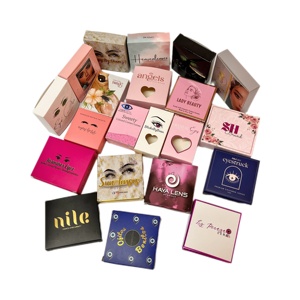
Pharmaceutical folding cardstock box with CMYK micro-embossing and tamper-evident optical blister compartments.
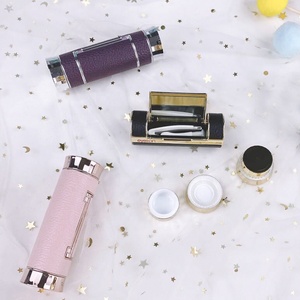
Medical-grade PP dual-lens soak chambers with soft-tip applicator tongs housed inside a luxury lipstick-style case.
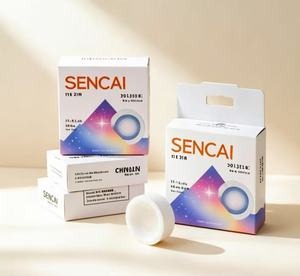
Biodegradable kraft and virgin paper packaging engineered specifically for daily and monthly blister pack displays.
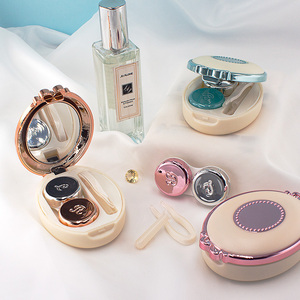
Compact injection-molded travel container with an integrated mirror, non-shedding insertion wand, and solution bottle.
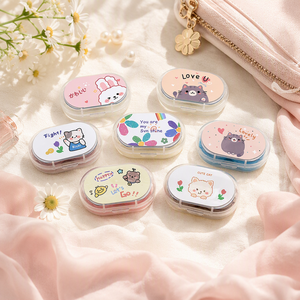
Youth-targeted retail cosmetic contact case line molded from autoclave-safe medical polypropylene.
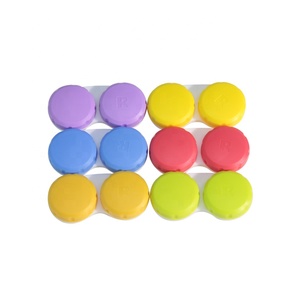
Precision-threaded leak-resistant dual caps with tactile L/R indicators, optimized for bulk distribution.
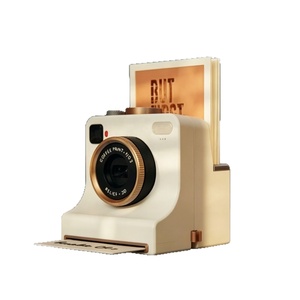
Complementary factory-grade 3D graphic printing equipment for retail branding, client promotional sets, and boutique merchandise.
As the international vision-care and beauty-tech sectors converge, the global contact lens manufacturing supply chain has undergone fundamental structural shifts. Guangzhou, located at the core of Guangdong's Pearl River Delta industrial cluster, has transformed from an assembly terminal into the world’s preeminent center for precision contact lens cast-molding, biocompatible hydrogel syntheses, and cleanroom automated packaging. This whitepaper analyzes the metallurgical, chemical, logistical, and compliance factors that make Guangzhou exporters and wholesalers the primary choice for global brand owners, medical distributors, and optical retail chains.
Historically, soft contact lenses were produced utilizing 2-hydroxyethyl methacrylate (poly-HEMA) matrixes, which possessed inherent limitations in oxygen transmissibility (typically with a Dk value between 8 and 18 Fatt units). In prolonged wearing environments or low-humidity indoor climates, low Dk lenses induce transient corneal hypoxia, epithelial edema, and conjunctival hyperemia.
Guangzhou’s leading production lines have achieved full commercialization of third-generation silicone hydrogel macromers (such as Filcon V and custom fluoro-silicone prepolymers). By integrating siloxy macromers with hydrogel hydrophilic monomers via proprietary cross-linking reagents, our automated lines achieve Dk/t values exceeding 85 to 125 Dk/t at 35°C. This breakthrough maintains natural aerobic corneal metabolism while achieving a balanced water content (40%–55%), a low modulus (0.4–0.6 MPa) for immediate tactile comfort, and superior wettability without plasma-discharge surface treatment.
Core Biocompatibility Benchmark: Full containment of all pigment particulates inside the inner polymer matrix ensures zero pigment contact with ocular tissues. Our Guangzhou cleanrooms operate certified Class 100,000 (ISO Class 8) HVAC filtration setups with positive air pressure to eliminate particulate contamination during monomer dosing and automated blister heat-sealing.
The manufacturing process directly determines the peripheral edge configuration, lens hydration dynamics, and surface finish. While precision spin-casting and lathe-cutting (diamond turning) retain value for bespoke rigid gas permeable (RGP) or prosthetic scleral designs, high-volume disposable and cosmetic soft lenses rely on automated double-sided cast molding.
| Technical Parameter | Guangzhou Automated Cast-Molding | Conventional Diamond Lathe-Cutting | Clinical / Commercial Significance |
|---|---|---|---|
| Base Curve (BC) Tolerance | ±0.02 mm (8.4 mm to 8.7 mm) | ±0.05 mm | Consistent corneal alignment; minimizes lens decentration and limbal impingement. |
| Diameter (DIA) Consistency | ±0.05 mm (14.0 mm to 14.5 mm) | ±0.10 mm | Standardized iris coverage; eliminates visual pupil obstruction in colored contacts. |
| Center Thickness (CT @ -3.00D) | 0.06 mm – 0.08 mm uniform | 0.09 mm – 0.12 mm | Lower center thickness dramatically maximizes oxygen flux throughout the cornea. |
| Edge Profile Architecture | Beveled Rounded Taper (Zero Flash) | Step-cut, manually polished | Reduces conjunctival mechanical friction and tear meniscus disruption during blinks. |
| Production Capacity / Shift | 120,000 – 250,000 blisters | 1,200 – 3,000 units | Massive scalability allows aggressive unit cost control for bulk brand distribution. |
The color contact lens market—ranging from subtle natural limbal-enhancing rings to intricate anime and cosplay graphics—demands total ocular safety. Low-cost counterfeit lenses use surface pad printing where phthalocyanine, iron oxide, or titanium dioxide pigments are stamped directly onto the lens posterior or anterior surface. When placed on the cornea, eyelid shear stresses cause physical abrasion, leading to pigment leaching, bacterial keratitis, and toxic anterior segment syndrome (TASS).
Our Guangzhou cleanroom facilities enforce the Full Sandwich Encapsulation Method. In this architecture, an initial base monomer layer (virgin hydrogel) is injected into the virgin mold; the automated microscopic pad printer deposits medical-grade, non-cytotoxic, USP-grade organic pigments in a calibrated dot-matrix configuration; subsequently, an identical top layer of virgin hydrogel monomer is dispensed over the printed layer before thermal or UV polymerisation. The resulting lens encapsulates the pigments between two clear polymer barriers, making pigment migration chemically and mechanically impossible.
Operating out of Guangzhou's advanced export ecosystem, our manufacturing facility merges certified medical device production with streamlined global supply chain logistics.
Our plant operates under certified Medical Device Quality Management Systems. Every batch undergoes bio-burden validation, cytotoxicity assaying (ISO 10993-5), residual monomer extraction checks, and 100% automated optical inspection (AOI) to guarantee zero bubble or edge defects.
We provide full-spectrum turnkey services: CAD mold fabrication for private lens geometries, Pantone-accurate cosmetic pattern design, sterile blister foil sealing, and FSC-certified paperboard outer packaging featuring custom UV, foil, and bilingual legal text.
Situated within 45 minutes of Guangzhou Baiyun International Airport (CAN) and Nansha Seaport, we offer cold-chain and temperature-controlled air freight solutions with direct access to North America, Europe, Australia, and Southeast Asia within 3–7 transit days.
Market dynamics are reshaping the optical industry. Distributors and wholesalers must align procurement strategies with evolving regulatory frameworks, material evolutions, and retail consumption behaviors.
Global demand is migrating rapidly from yearly replacement cycles to 1-Day daily disposable modalities. Daily lenses eliminate lens care non-compliance, acanthamoeba keratitis risks, and preservative-induced ocular surface dryness.
With the implementation of the EU Medical Device Regulation (MDR 2017/745) and strict Health Canada / US FDA 510(k) enforcement, cosmetic lenses without medical clearance are being barred from retail. Factory traceability and verifiable technical files are non-negotiable.
Procurement mandates increasingly require recyclable polypropylene blister packs, reduced secondary cardboard footprints, and solvent-free water-based manufacturing processes to satisfy corporate ESG directives across European and North American markets.
Traditional multi-container MOQs are giving way to agile high-mix, low-volume (HMLV) private label programs. Brands test hyper-niche aesthetic colorways and specialized prescription powers (Plano down to -10.00D) with fast turnaround schedules.
Essential technical, legal, and operational answers for procurement directors, optometry clinic buyers, and cross-border e-commerce brand managers.
For custom OEM/ODM projects with unique packaging, branded foil, and dedicated lens designs, our MOQ typically begins at 500 to 1,000 pairs per color/power combination for in-stock hydrogel formulations. For full custom cast-mold geometries or unique silicone hydrogel formulations, MOQs are structured around batch autoclave capacities (typically 10,000 to 20,000 blister units). We also offer turnkey starter packages for emerging digital brands.
Each lens blister is sealed with a multi-laminate medical aluminum foil barrier and subjected to saturated steam sterilization in an industrial autoclave cycle validated at 121°C (250°F) for at least 20 minutes under strict Fo lethality monitoring. In-line burst pressure tests and methylene blue dye immersion tests are conducted on every batch according to ISO 11607 to guarantee the hermetic seal withstands atmospheric pressure shifts in air freight cargo holds.
We provide full technical documentation dossiers (Technical File / DHF), including ISO 13485:2016 quality certificates, CE mark declarations under European directives, US FDA facility registration numbers and 510(k) summary references, Material Safety Data Sheets (MSDS), certificates of analysis (CoA) per batch, and accelerated 5-year shelf-life stability test reports.
Standard warehouse catalog designs (ready-to-ship inventory in Plano or standard myopia steps) ship within 3 to 7 business days via express air courier. Custom OEM batch production runs—encompassing specialized pad-printing, power sorting from Plano down to -8.00 (in 0.25D/0.50D increments), sterile sealing, and custom folding cartons—require approximately 25 to 35 working days post artwork approval and deposit verification.
Yes. While decorative lenses from low-tier producers often only come in 0.00 (Plano), our automated cast-molding lines accommodate comprehensive optical correction. We routinely produce powers from -1.00 to -5.00 in 0.25D increments, and -5.50 to -8.00 (or -10.00 upon custom request) in 0.50D increments. Custom toric (astigmatism) and multifocal cosmetic molds can also be engineered under custom OEM contracts.
Contact lenses are universally categorized under Harmonized System (HS) Code 9001.30.00 (Contact lenses of any material). Secondary accessories, such as medical-grade contact lens cases, are classified under HS Code 3923.10.00 or 3926.90.90 depending on the destination customs authority. Our Guangzhou export team prepares all commercial invoices, packing lists with net/gross medical weights, and country-of-origin certificates (Form A, Form E, or RCEP) to optimize tariff treatment.