Tracked delivery to every Canadian province & territory · View shipping details
Global B2B Supply Hub · ISO 13485 & CE Certified

China Best Cosmetic Contact Lens Supplier, Suppliers & Wholesalers

Global OEM/ODM contract manufacturing, custom packaging engineering, and medical-grade private label circle lenses for high-volume beauty distributors and optical brands.

Curated Export Portfolio: Lenses, Accessories & Turnkey Packaging

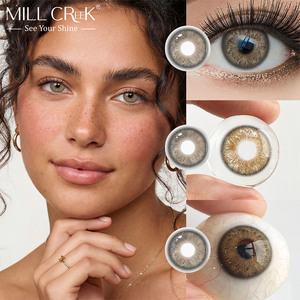
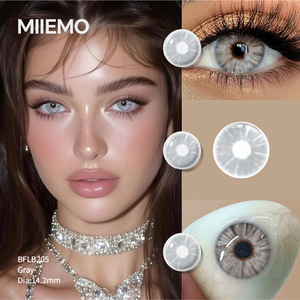
Engineered under stringent cleanroom protocols with Full Sandwich Color Encapsulation. Review our 8 core production line benchmarks below.

Get Catalog

Decoupling Supply Risks: Why China Dominates the Global Cosmetic Contact Lens Supply Chain

The global market for decorative and cosmetic contact lenses has transitioned from an optical niche to a major driver of the fast-beauty and aesthetics industry. Valued at over USD 1.8 billion with a projected compound annual growth rate (CAGR) exceeding 8.4% through 2032, cosmetic lenses require strict medical device manufacturing protocols alongside high-velocity fashion colorway prototyping. Brand owners, beauty chain buyers, optometric networks, and cross-border e-commerce distributors increasingly rely on specialized Chinese manufacturers as primary OEM/ODM partners.

Historically concentrated in South Korea and Taiwan, colored lens production has undergone a fundamental technological migration over the last decade. Tier-1 Chinese suppliers have integrated automated cast-molding infrastructure, ultra-precise computer numerical control (CNC) nano-lathe fabrication, and patented color-sandwich encapsulation lines that match or exceed traditional production hubs. This technological leap allows China's supply ecosystem to deliver exceptional color vibrancy, high oxygen permeability, and strict batch-to-batch repeatability at scalable volume costs.

Search Intent & Sourcing Reality: International procurement heads searching for "China best cosmetic contact lens supplier suppliers & wholesalers" look beyond catalog photos. Professional buyers evaluate cleanroom classifications (Class 100,000 ISO 8 suites), monomer purity, extractable-leachable safety profiles, and registration support across jurisdictions—including US FDA 510(k), EU MDR 2017/745 (CE Class IIa), and Health Canada Class II medical device licensing.
24+
Diopter Steps (0.00 to -8.00)
99.8%
Pigment Encapsulation Integrity
ISO 13485
Certified Medical QMS
15 Days
Rapid Custom Color Prototyping

Structural Comparison: China Sourcing vs. Legacy Regional Manufacturers

When engineering a multi-market brand footprint, enterprise buyers weigh material stability, unit economics, regulatory documentation, and packaging modularity. The comparative technical breakdown below illustrates key operational metrics across major sourcing centers:

Evaluation Parameter Tier-1 China Factory Hub (Our Benchmark) South Korea OEM Suppliers Taiwan Contract Foundries
Base Polymer Composition Purified PolyHEMA-NVP / Bio-Silicone Hydrogel Standard HEMA / Polymacon High-Dk Silicone Hydrogel
Encapsulation Method Dual-Layer Cast-Molding Sandwich (Zero Pigment Exposure) Pad Printing with Coating / Sandwich Front-Surface Encapsulation
Standard Minimum Order (MOQ) 50–100 pairs/color (Stock); 500 pairs (Custom OEM) 1,000–3,000 pairs/SKU 5,000–10,000 pairs/SKU
Turnkey Packaging Integration In-house rigid boxes, blister sealing & accessory sets Outsourced to secondary packagers Primarily standardized blister cartons
Regulatory Dossier Support US FDA 510(k), CE 0197, ISO 13485, NMPA Class III MFDS, CE, Select FDA TFDA, CE, US FDA

Future Purchasing Trends Shaping Global Cosmetic Contact Lens Orders

Market preferences, medical regulatory scrutiny, and consumer wellness habits are rapidly evolving. Wholesalers and private labels must position their inventory ahead of these five market transitions.

1. Daily Disposable Domination

Global demand is shifting rapidly from annual lenses to 1-Day daily disposables. Driven by consumer ocular health awareness and low maintenance, daily packs yield higher reorder velocities and stable subscription revenue.

2. High-Dk Silicone Hydrogel

Formulations incorporating fluoro-silicone macromolecules deliver Dk/t ratings > 80, eliminating end-of-day corneal hypoxia. Colored SiHy lenses now allow 12+ hours of comfortable wear, expanding market share in dry and cold climates.

3. Micro-Dot Optical Blending

Single-tone designs are being replaced by high-definition 3-tone and 4-tone dot matrices. Micro-pigmentation mimics natural iris crypts and collarette striations, providing realistic color shifts even on deep brown irises.

4. Sustainable Secondary Packaging

Global retail chains demand FSC-certified kraft packaging, bio-degradable blister lidding foil, and reduced plastic in starter kits. Coordinated unboxing kits now serve as key sales conversion drivers on TikTok and Instagram.

5. Low-MOQ Private Labeling

Traditional 10,000-unit minimums are being replaced by modular production runs (100–300 units per shade). Agile digital brands can test regional color preferences with minimal capital exposure before full-scale inventory rollouts.

Technological Horizons: Advanced Pigment Encapsulation & Automated Inspection

Historically, the cosmetic contact lens category faced scrutiny regarding uneven pigment deposition, surface roughness, and reduced oxygen permeability. Poorly manufactured novelty lenses placed ink layers directly on external surfaces, causing abrasive mechanical friction against corneal epithelial cells and tarsal conjunctiva.

Modern tier-1 Chinese contract manufacturers resolve these challenges through automated Full Sandwich Cast-Molding Technology. Non-toxic, pharmaceutical-grade organic pigments (iron oxides, copper phthalocyanine, titanium dioxide) are injected directly into the central monomer layer before thermal photopolymerization. The coloring agents remain completely encapsulated within the biocompatible polymer matrix. As a result, neither the cornea nor the eyelid ever touches the colorant, ensuring a smooth surface and stable optical comfort.

Multi-Tier Water Retention

By copolymerizing Hydroxyethyl Methacrylate (HEMA) with N-Vinylpyrrolidone (NVP) and hydrophilic Hyaluronic Acid cross-linkers, modern lenses maintain 38%–42% equilibrium water content without drawing tear film moisture from the wearer's ocular surface.

Automated Machine Vision AOI

High-speed line-scan CCD cameras inspect every lens post-hydration. The automated system checks edge bevel integrity, concentricity, diameter tolerances (±0.05 mm), and cosmetic dot positioning, instantly rejecting imperfect units.

Integrated UV Blocking Core

Class II UV blockers are integrated directly into the monomer formulation. Finished lenses absorb over 70% of UVA and 95% of UVB radiation without altering optical clarity or shifting cosmetic color balance.
End-to-End OEM/ODM Manufacturing Infrastructure

From initial diopter formulation to multi-lingual retail packaging, our contract manufacturing services support brand owners at every production stage.

Comprehensive Power Range

Full prescription availability across 24 standard powers: 0.00 (Plano) through -1.00 to -8.00 (-0.25 steps to -5.00; -0.50 steps to -8.00) across natural and fashion series.

Turnkey Packaging Ecosystem

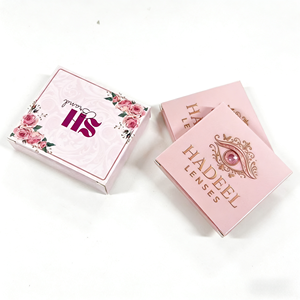
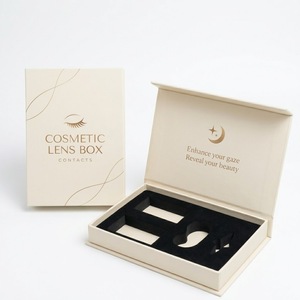
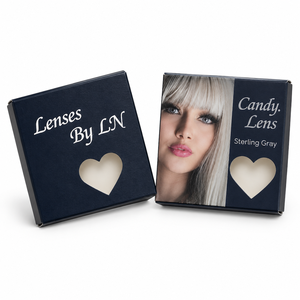
We manufacture custom kraft gift boxes, magnetic flip cardboard cases with custom EVA inserts, heart-shaped display windows, and blister packs with tailored bilingual labeling.

Full Wear-Cycle Flexibility

Scalable tooling allows production runs across 1-Day, 1-Month, 6-Month, and 1-Year replacement cycles, tailored to your market's regulatory classifications and consumer preferences.

Direct Global Logistics Hub

Seamless international shipping lines with end-to-end tracked courier services to North America (USA, Canada), Europe, Australia, Latin America, and Southeast Asia.

Medical Device Quality Compliance

Cosmetic lenses are regulated as Class II or Class III medical devices across key export markets. Our manufacturing facilities operate under comprehensive Quality Management Systems audited to ISO 13485:2016, supported by active CE technical files, US FDA 510(k) submissions, and GMP cleanroom validation.

ISO 13485:2016 Certified CE Medical Notified Body Audited US FDA Cleared Production Health Canada Licensing Ready
FDA, CE and ISO 13485 Quality Certifications and Compliance Standards

Frequently Asked Questions for Wholesale & Contract Manufacturing

Essential regulatory, technical, and logistics considerations for sourcing cosmetic contact lenses from China.

Are zero-power (plano) cosmetic contact lenses regulated as medical devices?

Yes. Under major international frameworks—including US FDA (21 CFR 886.5928), EU MDR 2017/745 (Annex XVI), and Health Canada—decorative and plano cosmetic lenses are regulated as medical devices alongside prescription corrective lenses. Importers must source from certified manufacturers that maintain full technical files and biocompatibility dossiers.

How do you prevent pigment migration and ensure ocular safety?

We utilize an automated dual-layer cast-molding sandwich process. Color pigments are permanently sealed between two clear layers of PolyHEMA or hydrogel polymer. The color layer never makes physical contact with the corneal surface or palpebral conjunctiva, fully passing ISO 10993 cytotoxicity and ocular irritation assays.

What is the standard Minimum Order Quantity (MOQ) for custom private label orders?

For factory-stock color designs with custom white-label packaging, our MOQ starts at just 50 to 100 pairs per shade. For fully custom color dot patterns, custom base curves, or proprietary diopter distributions, the production run starts at 500 pairs per SKU.

Can you provide custom diopters for customers with myopia?

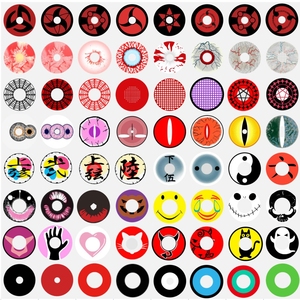
Yes. Our primary product series are manufactured in 24 power options: 0.00 (Plano) and corrective increments from -1.00 to -8.00 (-0.25D increments up to -5.00D; -0.50D increments from -5.00D to -8.00D). Specific cosplay and novelty lines are also available in plano for immediate shipment.

What documentation is provided to support international customs clearance?

We provide comprehensive export documentation packs for each shipment: Commercial Invoices, Packing Lists, Certificates of Analysis (COA) per batch, ISO 13485:2016 declarations, CE Certificates of Conformity, Sterilization Validation Reports (Gamma/Autoclave), and MSDS sheets for lens saline solution.

Can packaging be customized for bilingual or regional language mandates?

Yes. We offer end-to-end OEM packaging engineering. Our design and compliance teams coordinate English/French bilingual cartons for Canadian compliance, FDA-compliant carton panels for the US market, and multi-lingual instruction leaflets (IFUs) that meet European Union medical labeling standards.

Launch or Scale Your Cosmetic Lens Brand Today

Access our complete product library featuring over 500+ proven colorways, request sterile physical sample sets, and review factory-direct wholesale pricing tiers with our OEM engineering team.