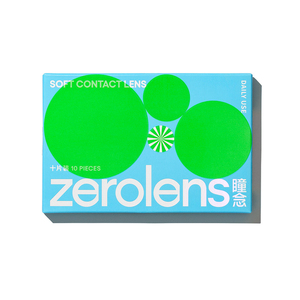
Precision Engineering & Custom Packaging
Curated B2B Production Line & Luxury Turnkey Solutions
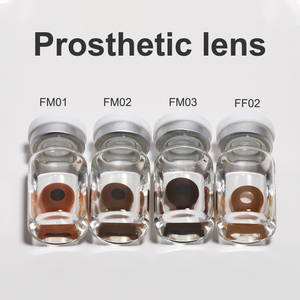
Explore high-velocity SKU inventory, therapeutic prosthetic lenses, and high-barrier custom packaging engineered strictly under medical device directives and GMP cleanroom environments.
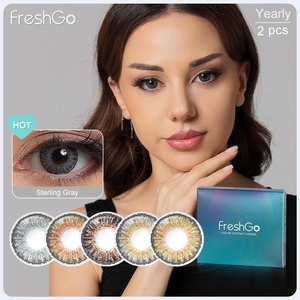
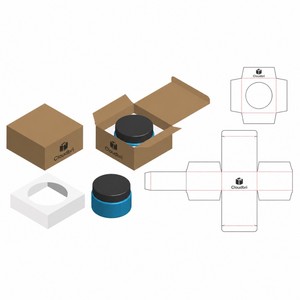
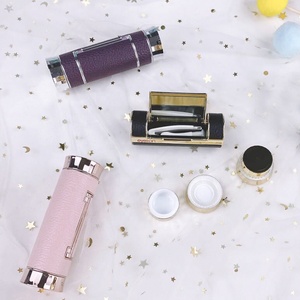
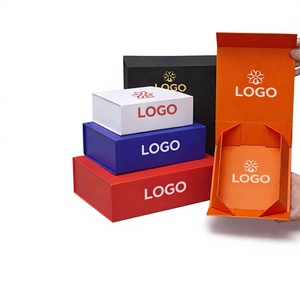
Core Manufacturing Advantages
Why Tier-1 Global Optical Brands Source From Us
Combining proprietary sandwich printing encapsulation, ISO 13485 cleanroom infrastructure, and flexible private-label customization to scale international contact lens programs.
Full-Chain Regulatory Approvals
We eliminate global customs and registration bottlenecks through verified medical-grade compliance and rigorous post-market surveillance records.
- ISO 13485 certified Medical Device QMS
- CE certified under European Medical MDR standards
- US FDA 510(k) cleared master file records
- Full traceability per sterile blister/vial batch
Proprietary Sandwich Dye Printing
Micro-encapsulation ensures that biocompatible pigments remain locked between polymer layers, entirely isolated from cornea and conjunctiva tissue.
- Zero pigment leaching or corneal friction
- Multi-layer radial dot-matrix tint reproduction
- High-definition limbal rings and natural gradients
- Smooth non-ionic hydrogel surface finish
Extensive Prescription Range (0 to -8.00D)
Offering one of the broadest ready-to-ship prescription power arrays in cosmetic hydrogel casting, bridging cosmetic demand with vision correction.
- Full 24-power matrix: Plano (0.00) down to -8.00
- Precision 0.25D increments (0.00 to -5.00D)
- Precision 0.50D increments (-5.00 to -8.00D)
- Custom astigmatic toric color casting capability
Turnkey OEM / ODM & Secondary Packaging
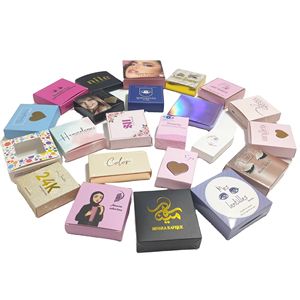
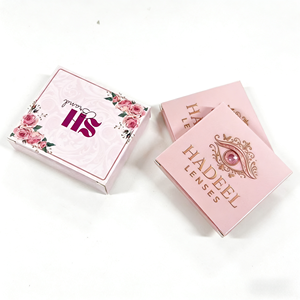
Complete private-label custom engineering from structural blister foils to luxury rigid gift packaging, secondary displays, and lipstick case assemblies.
- Full blister foil custom printing and foil barrier sealing
- Rigid kraft, magnetic boxes, and anti-counterfeiting UV
- Bilingual & multi-lingual regulatory label drafting
- Low MOQ starting points for emerging beauty DTC brands
50M+
Annual Lens Output
Class 100K
Automated GMP Cleanrooms
24 Powers
Plano to -8.00 Prescription
99.8%
Batch Release QA Pass Rate
Strategic Procurement Insights
Future Sourcing Trends: The Global Transition in Cosmetic Contacts (2025–2030)
B2B procurement is pivoting toward high-Dk silicone hydrogel chemistries, hyper-short wear cycles, and automated omnichannel compliance architectures.
1. Material Evolution: High Oxygen Silicone Hydrogel
Traditional HEMA polymers (Dk 8–10) are systematically transitioning toward Third-Generation Silicone Hydrogel polymers boasting Dk/t ratings exceeding 80–120. Wholesale buyers are anticipating tightening ophthalmic recommendations across Europe and North America that penalize hypoxic corneal stress. Manufacturers integrating water-gradient technology offer premium wettability without structural lipid deposit affinity.
2. Displacement of Yearly Lenses by Daily Disposables
While yearly vials preserve strong margins in specific regions, the compound annual growth rate (CAGR) of 1-Day Daily Disposable cosmetic lenses outpaces all other replacement cycles at 9.4% annually. Buyers seek automated blister cartoning (2-pack, 10-pack, 30-pack formats) to satisfy hygiene-first younger demographics who eliminate lens care regimes, protein enzyme cleaning, and lens case cross-contamination risks.
3. Eco-Responsible Blister & Kraft Packaging Mandates
Sustainability regulations—including the EU Packaging & Packaging Waste Regulation (PPWR)—are pushing distributors to eliminate redundant secondary virgin plastics. Sourcing trends show skyrocketing preference for recyclable kraft folding paperboard, lightweight polypropylene blister tubs, water-based printing varnishes, and minimized aluminum foil gauge without compromising sterile microbial seal integrity.
Material Science & Optical Parameters
Industrial Production Specifications Matrix
Direct comparison of core optical parameter configurations manufactured for global distributor programs.
| Parameter Category | Standard Cosmetic Hydrogel | Advanced Silicone Hydrogel | Therapeutic Prosthetic Series |
|---|---|---|---|
| Base Polymer | PolyHEMA / NVP Complex | Filcon V / Silicone Macromer | HEMA + High-Opacity Core |
| Water Content (%) | 38% – 42% (Low dehydration) | 48% – 55% (High equilibrium) | 38% – 40% (Dimensional stability) |
| Oxygen Permeability (Dk/t) | 11 – 15 × 10⁻⁹ | 85 – 120 × 10⁻⁹ | 12 – 18 × 10⁻⁹ |
| Base Curve (BC) / Diameter | 8.5mm – 8.6mm / 14.0mm – 14.5mm | 8.6mm – 8.8mm / 14.2mm | 8.4mm – 8.6mm / 14.0mm – 14.2mm |
| Color Embedding Tech | Dual-Layer Cast Sandwich | Encapsulated Matrix Dot Infusion | Custom Hand-Tint / Occlusion Core |
| Regulatory Classification | Class II (US FDA / MDR / NMPA) | Class II / Class III depending on market | Class II Medical Device |
B2B Procurement Intelligence
Frequently Asked Questions: Global Sourcing & Compliance
Clear, direct answers for optical importers, brand incubators, and distribution wholesalers vetting China manufacturing partnerships.
What are the primary differences between Cast Molding and Lathe Cutting for cosmetic lenses? +
Cast molding is an automated, high-precision industrial process where liquid monomers are injected into high-precision optical molds and cured via UV or thermal polymerization. It delivers exceptional reproducibility, ultra-smooth lens edges, lower unit costs, and allows seamless multi-layer sandwich pigment printing. Lathe cutting, by contrast, mechanically carves cured polymer buttons individually, which is slower, costlier, and typically reserved for complex rigid gas-permeable (RGP) or custom medical prosthetic parameters rather than mass-market cosmetic batches.
How does your manufacturing facility guarantee zero colorant leaching and eye safety? +
Safety is maintained by our proprietary sandwich encapsulation process. Colorants are pad-printed onto an initial monomer matrix layer before a secondary polymer coating fully encapsulates the pigment. The lens is then fully polymer-cured. This creates an impermeable, bio-inert barrier between the pigment granules, the corneal epithelium, and the inner palpebral conjunctiva. Each batch undergoes rigorous cytotoxicity, ocular irritation testing (ISO 10993), and rub-resistance testing in medical-grade saline solutions before batch release.
What documentation do you provide for FDA, Health Canada, and EU MDR clearance? +
We provide our wholesale partners with complete Device Master Files (DMF), ISO 13485:2016 quality management system audit reports, CE Declaration of Conformity certificates, biological evaluation reports (ISO 10993 biocompatibility suite), accelerated aging shelf-life test verifications (up to 5-year validated shelf stability), and detailed sterilization validation reports (Ethylene Oxide or Steam Autoclave conforming to ISO 11135 / ISO 17665).
What are your minimum order quantities (MOQs) for custom private label packaging? +
For standard factory brand inventory in stock blister trays or glass vials, MOQs start as low as 50–100 pairs across mixed SKUs. For custom OEM blister foil lidding, custom barcoding, and bespoke secondary carton packaging with UV coating, magnetic closures, or luxury embossing, our MOQ generally begins at 1,000 to 3,000 units per artwork variation, enabling fast go-to-market testing for digital-native beauty brands and boutique clinic chains.
Can you produce custom pupil diameters and limbal ring diameters for prosthetic and cosplay lines? +
Yes. Beyond standard optical cosmetic diameters (14.0mm to 14.5mm with 8.5mm / 8.6mm base curves), our tooling division can engineer custom optical zone apertures (from clear 3.5mm pupil zones up to completely opaque blackout or mesh pupillary apertures), specific center thicknesses, and enlargement limbal rings (up to 14.8mm graphic diameters) for specialty cosplay, cinema SFX, or therapeutic prosthetic iris reconstruction.
What quality control protocols are applied to ensure power accuracy across 0.00 to -8.00D? +
100% of finished lenses undergo automated laser focal-power inspection and high-resolution optical wavefront analysis in saline cell immersion. This verifies back vertex power (BVP), cylinder aberration, surface edge burrs, and concentricity before secondary hermetic sealing. Every lot has a batch retention sample tracked under controlled storage for 5 years to guarantee full product traceability.
Launch or Scale Your Cosmetic Contact Lens Line Today
Connect directly with our senior OEM/ODM engineering specialists for customized product portfolios, competitive factory tiered pricing, regulatory technical dossiers, and physical sample kits delivered to your facility.
Contact Us