Plano to -8.00
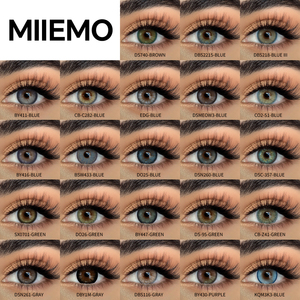
Curated medical-grade hydrogel lenses, high-precision diagnostic optics, and turnkey private-label cosmetic packaging manufactured under class 100,000 cleanroom environments.
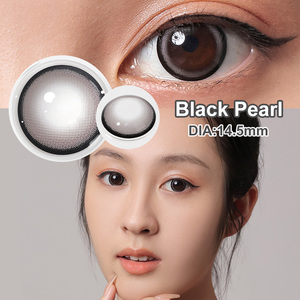


Annual Pieces Manufacturing Capacity
Cleanroom GMP Environmental Control
Plano to -8.00 Deep Rx Matrix Inventory
Worldwide Global Export Destination Footprint
From micro-precision cast molding to multilayer biological pigment isolation, explore the engineering capabilities that make our medical facility the trusted partner for top beauty brands, optometry chains, and cross-border distributors.
We deploy proprietary micro-encapsulation technology where bio-compatible color pigments are securely sealed between two pure hydrogel boundary layers. Pigments never make direct contact with the cornea or palpebral conjunctiva, completely preventing dye migration, ocular staining, or tissue abrasion.
Departing from antiquated lathe-cut techniques that yield surface aberrations, our fully automated nano-precision cast molding lines deliver sub-micron curvature consistency. Each mold guarantees exact base curve (8.5mm to 8.6mm) repeatability and edge bevel engineering for zero-friction eyelid blinking dynamics.
Color contact lenses are strictly regulated as Class II/Class III medical devices globally. Our manufacturing center operates under stringent ISO 13485 Medical Device Quality Management Systems, with product dossiers meeting US FDA 510(k), European CE MDR (EU 2017/745), and Health Canada medical device regulations.
Unlike trading intermediaries, our China-based facility delivers comprehensive vertical integration. We control chemical monomer formulation (HEMA, NVP, Silicone Macromers), precision tool steel mold manufacturing, automated high-speed pigment pad-printing, and final saline buffering.
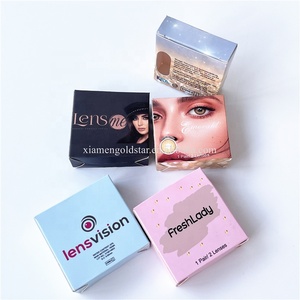
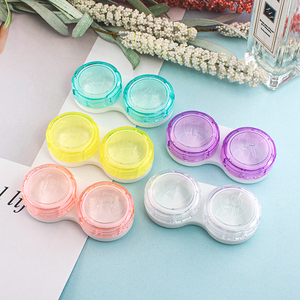
Our packaging division seamlessly pairs your custom brand concepts with medical-grade blister strips, custom PP travel cases, and luxury foil-stamped paper secondary packaging. With bilingual and trilingual typography expertise (English, French, Spanish, German, Arabic), we assist global exporters in meeting statutory labeling guidelines across North America, Europe, and Southeast Asia.

Rigorous chemical biocompatibility, mechanical tensile testing, and microbiological sterile packaging validations.
How wholesale buyers, beauty conglomerates, and medical distributors are recalibrating their supply chains to maximize inventory turnover, safety compliance, and direct-to-consumer margins.
In mature consumer optical markets such as North America, Europe, and East Asia, procurement volume is undergoing a decisive paradigm shift. While traditional 1-year replacement lenses remain popular in high-power prescription segments and niche cosplay lines due to sheer cost economy, over 64% of new retail procurement orders in 2024–2026 are shifting toward 1-Day (daily disposable) and 1-Month replacement modalities.
Consumers prioritize hygiene and ocular convenience: daily disposables eliminate the need for lens cases, rewetting agents, and chemical disinfecting solutions. For commercial procurement managers, daily color lenses yield significantly higher lifetime customer value (LTV), higher repeat ordering frequencies, and reduced liability exposure linked to improper end-user lens storage hygiene.
| Wear Modality | Primary Target Demographic | Procurement Margin Index | Regulatory & Hygiene Risk Profile | Recommended Packaging Config |
|---|---|---|---|---|
| 1-Day Disposable | Premium Beauty, Travel, Sensitive Eyes, Gen-Z | High Repeat (Highest LTV) | Extremely Low (Sterile single-use) | 10-Pack / 30-Pack Foil Blister Box |
| 1-Month Replacement | Daily Office Wear, Working Professionals | Stable Recurring Revenue | Moderate (Requires daily cleaning) | 2-Pack / 6-Pack Blister Trays |
| 6-Month / 1-Year | Cosplay, Theatrical, Value-Oriented Specialty | High Single-Sale Margin | Elevated (Prone to protein deposit build-up) | Sealed Glass Vial / PP Protective Cup |
Historically, decorative color lenses were synthesized almost exclusively using traditional hydrogel materials such as Polymacon (HEMA) and Etafilcon A. While offering outstanding initial wettability and structural softness, conventional hydrogels exhibit limited oxygen transmissibility (typically Dk/t 15–28 × 10⁻⁹). Modern optical buyers are actively contracting manufacturing lines capable of Silicone Hydrogel (SiHy) cosmetic lens co-polymerization.
Silicone Hydrogel elevates oxygen permeability upwards of Dk/t 80–120 × 10⁻⁹, permitting metabolic oxygen to freely diffuse across the corneal epithelium. This virtually eradicates corneal hypoxia, limbal redness, and end-of-day dryness—critical selling arguments for institutional optical clinics and high-end beauty boutiques seeking medical-grade credibility.
Global optical retailers operating in the European Union, Canada, and the United Kingdom must now navigate Extended Producer Responsibility (EPR) regulations and eco-packaging directives. Traditional PVC blister trays are facing heavy tariffs and import friction. B2B buyers now mandate 100% recyclable polypropylene (PP) blister casings paired with eco-solvent aluminum foil lids and FSC-certified paper secondary packaging.
Our production lines have eliminated toxic PVC thermoforming, offering partners fully recyclable PP packaging units that reduce overall virgin plastic content by 35% without jeopardizing the hermetic peel seal strength required to maintain 5-year sterile shelf life.
How cutting-edge polymer engineering and computer-generated iris algorithms are redefining natural aesthetics and vision comfort in modern contact lens export manufacturing.
Moving away from flat, pixelated concentric rings, our algorithmic multi-tone pad printing replicates the genuine anatomy of the human iris, incorporating crypts, radial furrows, and limbal feathering.
Dynamic clear-aperture engineering balances vibrant color transformation across dark melanin irises while maintaining an unimpeded 4.0mm optical zone, preventing tunnel vision in low-light environments.
Incorporating embedded Hyaluronic Acid (HA) and Polyvinylpyrrolidone (PVP) internal wetting agents right into the monomer matrix ensures sustained surface moisture retention exceeding 14 continuous hours.
Integrated UV-absorbing benzophenone polymers absorb >70% of UVA and >95% of harmful UVB radiation, meeting optometric standards for enhanced environmental ocular photoprotection.
Real-world insights addressing Minimum Order Quantities (MOQs), private label packaging customization, export clearances, regulatory submissions, and defect RMA policies.
Whether you require turn-key OEM/ODM private labeling, regulatory documentation dossiers for local import licenses, or high-volume wholesale pricing on our best-selling collections, our engineering and export team is ready to assist your growth.